
 Follow on Google
Getting traditional bank loans hasn’t always been easy for street vendors. A vegetable seller, chai vendor, someone selling snacks and cigarettes, an individual offering clothes or some other household item – running any street-side business could require working capital. However, going through the process for a traditional loan can involve paperwork and financial hurdles.
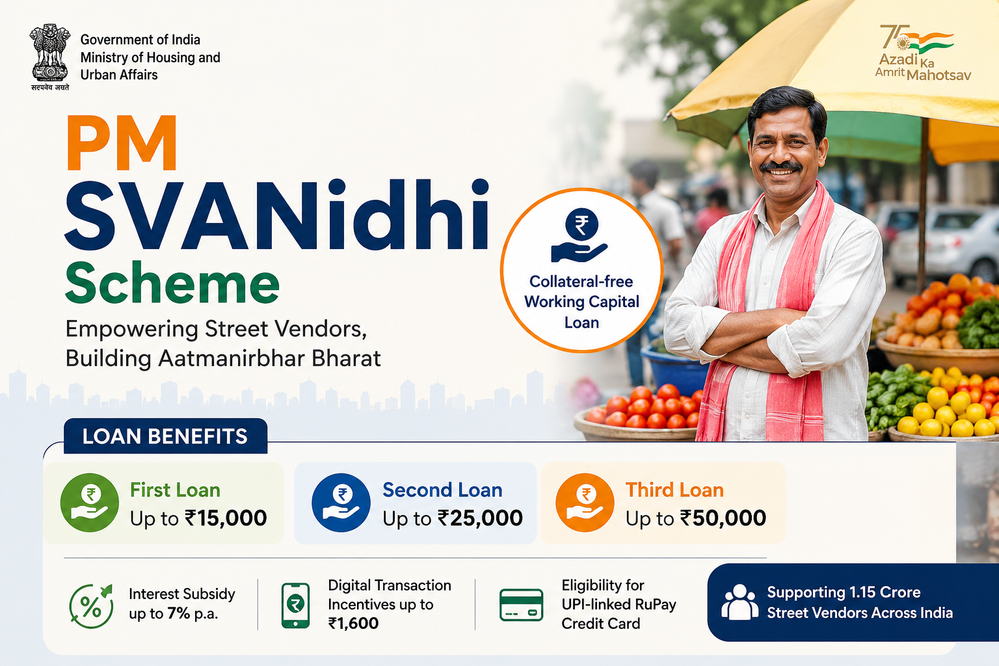
The PM SVANidhi Scheme was introduced to fill this gap and help street vendors access funds. Officially called Prime Minister Street Vendor’’s AtmaNirbhar Nidhi, PM SVANidhi provides working capital loans and other benefits for eligible street vendors.
In June 2020, the central government announced restructuring of the PM SVANidhi scheme with an extended lending period up to March 31, 2030.
What Is the PM SVANidhi Scheme?
The PM SVANidhi Scheme, a project spearheaded by the Central Government, is mainly intended to offer street vendors affordable working capital loans that don’t require collateral.
The PM SVANidhi scheme is in place to provide eligible street vendors with formal assistance for acquiring modest loans. However, as indicated by the scheme title itself, PM SVANidhi seeks to do much more than provide basic loan facilities.
The scheme hopes to provide street vendors better access to formal financial channels, bring them into the digital economy via incentivised digital transactions, and help them become eligible for wider government welfare programmes.
As per official press releases, around 1.15 crore street vendors currently benefit from PM SVANidhi, including around 50 lakh new vendors who have joined the scheme after its restructuring.
PM SVANidhi Loan Amount: How Much Can You Get?
Eligible vendors can now secure loans of up to ₹50,000 through the PM SVANidhi scheme. There are three loan levels under PM SVANidhi:
| Loan Tranche | Maximum Loan Amount |
|---|---|
| First Loan | Up to ₹15,000 |
| Second Loan | Up to ₹25,000 |
| Third Loan | Up to ₹50,000 |
The loan will have to be repaid within the specified number of months according to the loan level. Discounts are provided on timely repayment. Read on to learn more about the interest subsidy.
Each time a street vendor repay loans received under the PM SVANidhi scheme, they may be eligible for the next loan amount. Under PM SVANidhi, eligible vendors can get an interest subsidy of up to 7% per year if they repay their loans on time, as prescribed under the scheme.
PM SVANidhi Scheme Eligibility
The scheme is meant for eligible street vendors, including those involved in activities such as:
- Vegetable and fruit vending
- Food and snack vending
- Hawking and small retail businesses
- Selling clothing and household products
- Providing small services on streets or public spaces
- Other eligible street-vending activities
Verification of street vendors is typically done through Local Urban Bodies (ULBs) and several other authorised entities.
Street vendors should need a valid Certificate of Vending (CoV) OR Letter of Recommendation (LoR) issued by the concerned authorities. Please note that this is subject to eligibility and may differ from locality to locality.
The PM SVANidhi Scheme’s reach has gradually expanded, extending past officially designated urban zones to encompass census towns and surrounding peri-urban areas.
How to Apply for PM SVANidhi Scheme Online
Eligible applicants can generally apply through the official PM SVANidhi system or seek assistance from authorised channels.
Step 1: Check Your Eligibility
First, confirm whether you qualify as an eligible street vendor. Your vending status may need verification through the concerned Urban Local Body.
Step 2: Keep Required Details Ready
Applicants may need documents and information such as:
- Aadhaar details
- Mobile number
- Bank account details
- Certificate of Vending or Letter of Recommendation, where applicable
- Other documents requested during verification
Keeping your mobile number linked with Aadhaar may help with digital verification processes.
Step 3: Submit the Loan Application
Applications may be submitted through the PM SVANidhi portal or mobile application. Eligible vendors can also receive assistance through authorised local channels such as Urban Local Bodies and Common Service Centres.
Step 4: Verification and Loan Processing
After submission, the applicant’s identity and eligibility may be verified. The loan application is then processed by the concerned lending institution.
Step 5: Receive the Loan and Repay on Time
Once complete, the loan will be disbursed by way of banking process. Ensure that you pay back the loan in time to be eligible for higher loan amounts.
Digital Payments Bring Additional Benefits
PM SVANidhi’s unique offering lies in its encouragement and rewards for vendors adopting digital service usage. Under PM SVANidhi, you can earn discounts by adopting digital services.
As per the scheme’s regulations, those who utilize the restructured program and conduct digital transactions are eligible for rewards up to ₹1,600. After the second loan is repaid, eligible street vendors can apply for an RuPay Credit Card linked to their PM SVANidhi-approved UPI ID.
Why PM SVANidhi Matters
PM SVANidhi understands that street vendors play an important role in India’s economy. A small loan could be the difference between buying new stock for a vegetables seller or shutting shop for the day.
By offering small loans, micro credit and better access to financial services, PM SVANidhi allows street vendors to have better opportunities for long-term financial stability.
Important Note
Please keep in mind that this scheme’s application process and documentation requirements may change based on your state, whether you live in urban or rural India. Official announcements will provide more information on these aspects.
For the latest scheme updates and application guidance, visit the official PM SVANidhi portal or contact your concerned Urban Local Body or authorised service centre.